For a pop of color in your garden, you can do no wrong with some vibrant petunias from your local nursery. In addition to their beautiful presence, they’re also relatively easy to grow and arrange. If you’re wondering how to implement their lovely blooms into your garden, here are the ins and outs of petunia care.
What are petunias?
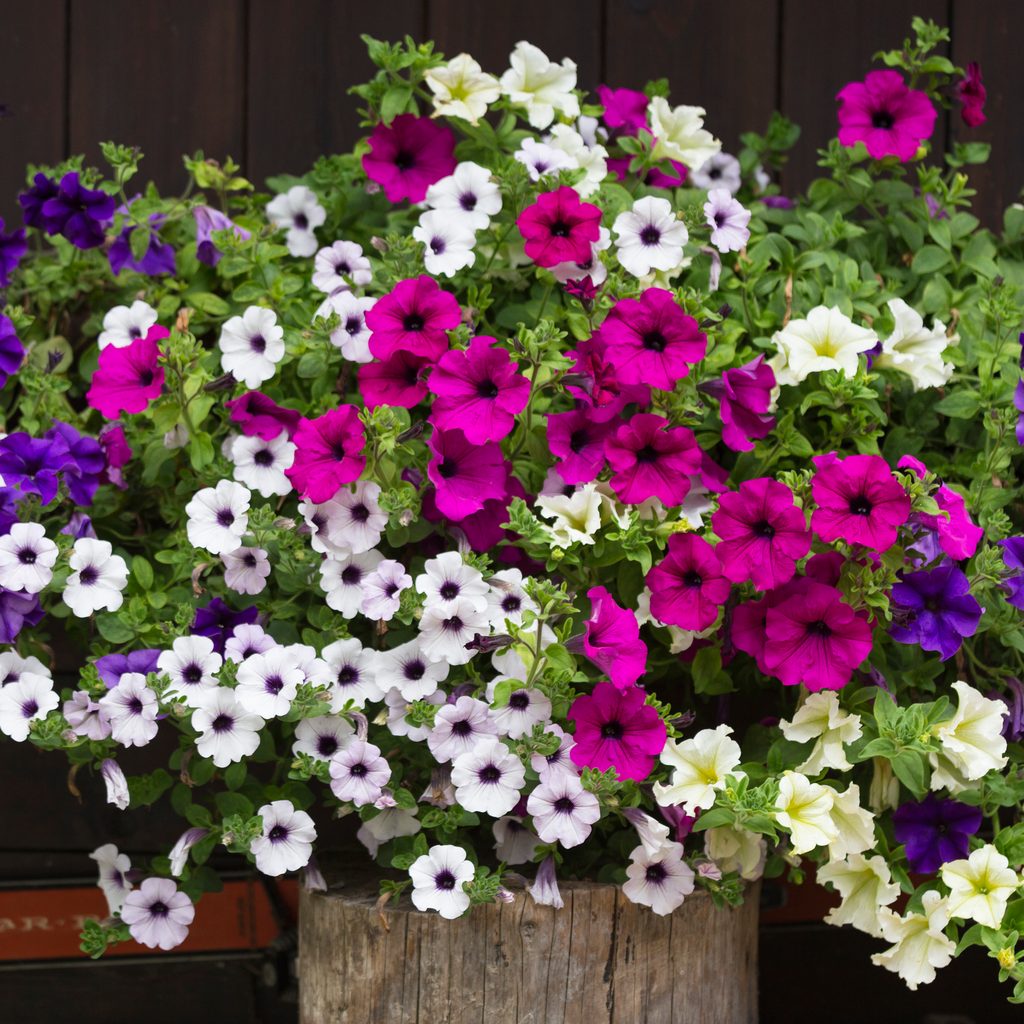
Perfect for hanging baskets or borders, petunias are some of the most common summer blooms, but their ubiquity doesn’t make them any less lovely. Native to South America, the petunia is a genus consisting of roughly 35 flowering species.
When it comes to color, their funnel-shaped flowers come in virtually every color except blue. You’ll be able to find them in single and double varieties, and some even come with stripes and veins. In terms of height, petunias aren’t too low or high; you’ll usually find them around 6 inches to 1.5 feet tall.
The grandiflora types tend to have larger and fewer blooms, whereas the multiflora ones have smaller but more abundant blooms — both look great in hanging baskets. Ideal for containers or hanging baskets, the milliflora varieties have even smaller flowers than multiflora, but are relatively hardy and easy to maintain. Spreading petunias, or wave petunias, are fast growers that look best as borders or ground cover, as they can spread around 4 feet.
How do you start petunias?
Starting petunias around springtime is easy, but you should be cautious when starting them because they have tiny seeds. Carefully empty a seed packet onto a white or clear surface, and then sprinkle your seeds onto a sterile growing medium divided into cells on a grow tray.
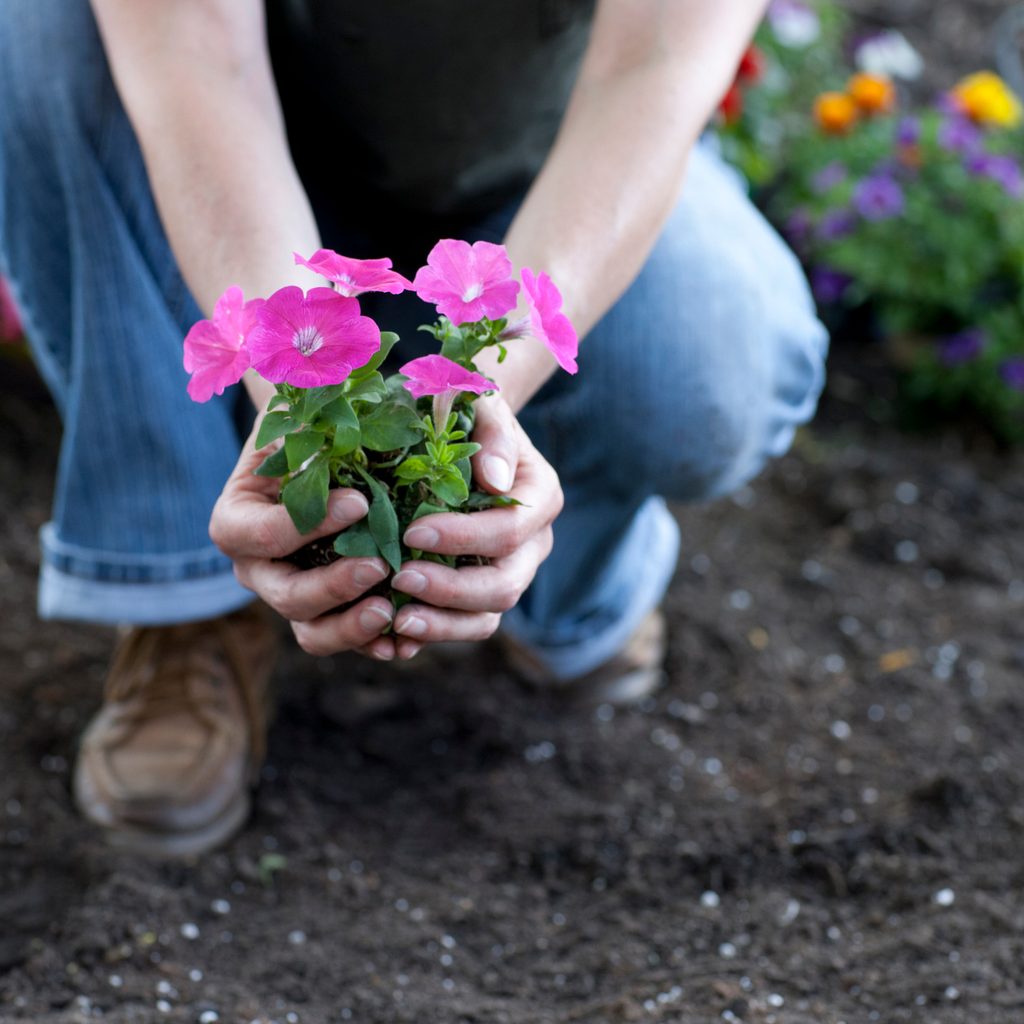
You don’t need to cover the seeds; all you have to do next is water them consistently and give them plenty of light. Keep them as warm as you can, as they generally start germinating anywhere between 5 and 15 days. If you’re transplanting them outside, wait for them to grow a few inches and have a set of three leaves before settling them down into the ground or moving them into larger containers. In the garden, space them around 8 to 12 inches apart.

How do you care for petunias?
Petunias aren’t high-maintenance plants, which is why it’s so common to find them as hanging basket plants or ground cover. That said, you still want to give them the best care possible so that they continue growing and blooming for you. Below are some tips on how to care for petunias.
Light
Ideally, you want to give your petunias 5 to 6 hours of sunlight a day, as sunlight is critical for healthy bloom development. Petunias thrive in full sun, but you can also keep them in partial shade. Too much shade, however, can cause your petunias to become spindly.
Temperature
You might be wondering, “Do petunias come back each year?” Petunias are generally annuals in most places, but you can keep them as perennials if you live in the warmer regions of zones 9 through 11. Their temperature sweet spot is 55 to 80 degrees Fahrenheit, but some varieties can tolerate temperatures down to 40 degrees Fahrenheit. Just keep your regional temperatures in mind as you shop for different petunia varieties. If you experience hot summers, mulch your petunias with organic materials to help with moisture retention and weed prevention.
Water
Petunias typically have shallow roots. While you want to consistently water them, you don’t want to overwater them and give them wet feet. If you keep your petunias in containers, you need to water them more often than if you plant them in a garden bed. While they can take some summer drought, petunias will be the most prolific bloomers with moderately moist soil.
Soil
Petunias aren’t picky when it comes to soil type, as long as you can provide them with good drainage and a slightly acidic pH. That said, they still benefit from nutrient-rich soil, so it’s a good idea to fortify your garden soil with compost when you plant your petunias. If you keep your petunias in containers, use a potting mix for proper drainage.
Pests
Petunias are generally hardy and healthy plants, but you may encounter the occasional pest with these attractive flowers. From time to time, you may need to handpick caterpillars, trim off leaves invaded by leaf miners, or blast off some mites with water. Check your leaves, flowers, and soil often for any signs of an infestation.
How do you keep petunias blooming?
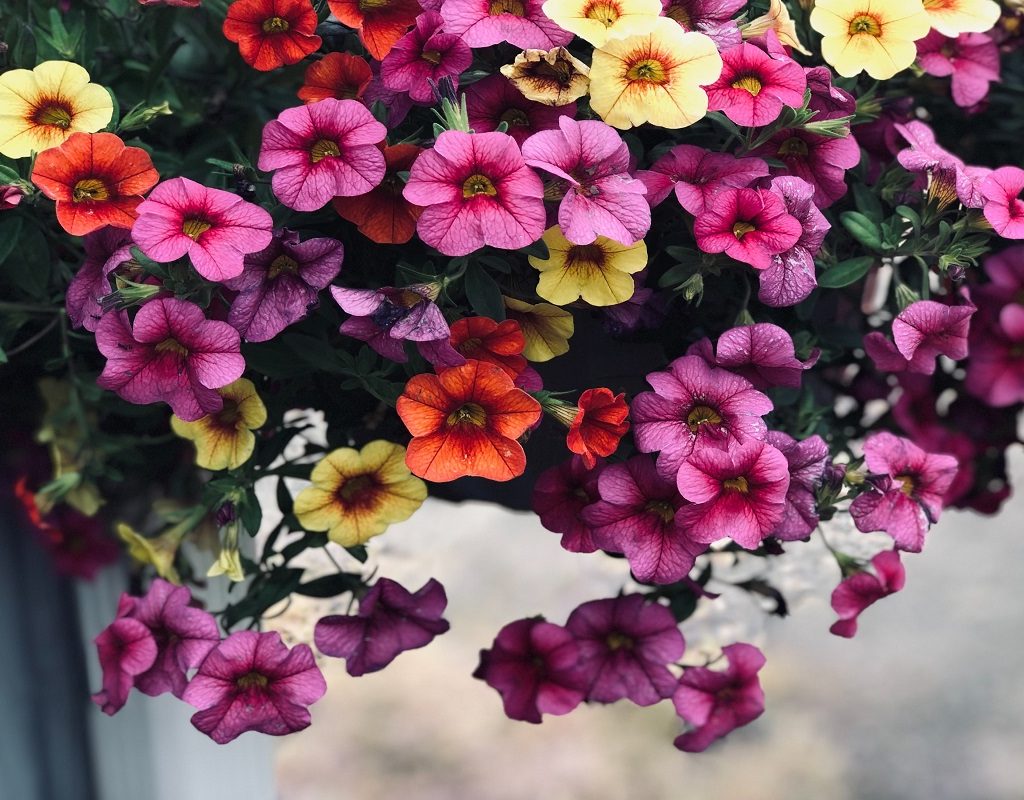
Petunias bloom around late spring to mid-autumn. For prolific blooms, keep up with fertilizing your petunias. Petunias are, generally speaking, heavy feeders. They do best with a monthly application of a balanced fertilizer (or fish emulsion or a bloom booster, if you’d like). Double-flowered types may benefit from a more frequent fertilizer cadence at every two weeks. At the height of summer, also try to move your flowers into partial shade, as high temperatures can put a pause on blooming.
Do petunias need to be deadheaded?
Deadheading isn’t a must for petunias to keep blooming, but pinching back dead flowers helps petunias put out as many blooms as possible. To help leggy petunias bloom again, you can also cut them back about half the size of their shoots and fertilize them regularly. If you let petunias go to seed, they will stop blooming.
For easy-going flowers that’ll instantly perk up any garden space, consider classic petunias. No matter if you have them in beds or hanging baskets, these lovely flowers will brighten up your landscape as long as you give them plenty of light and remember to water and feed them generously.